

Cold Shrink Tube: Function, Mechanism, and Application Scenarios Explained
Time: 2026-02-10 13:49:06 Copyfrom: SuZhou Volsun Electronics Technology Co.,Ltd.
In electrical and energy systems, cable terminations, joints, and insulation transitions are exposed to long-term mechanical stress, environmental aging, and electrical field concentration. Traditional protection methods often struggle to maintain stable sealing pressure over time, especially under vibration, temperature cycling, and outdoor exposure.
Cold shrink tube technology addresses this problem by providing a pre-engineered elastic insulation and sealing system that works without thermal activation.
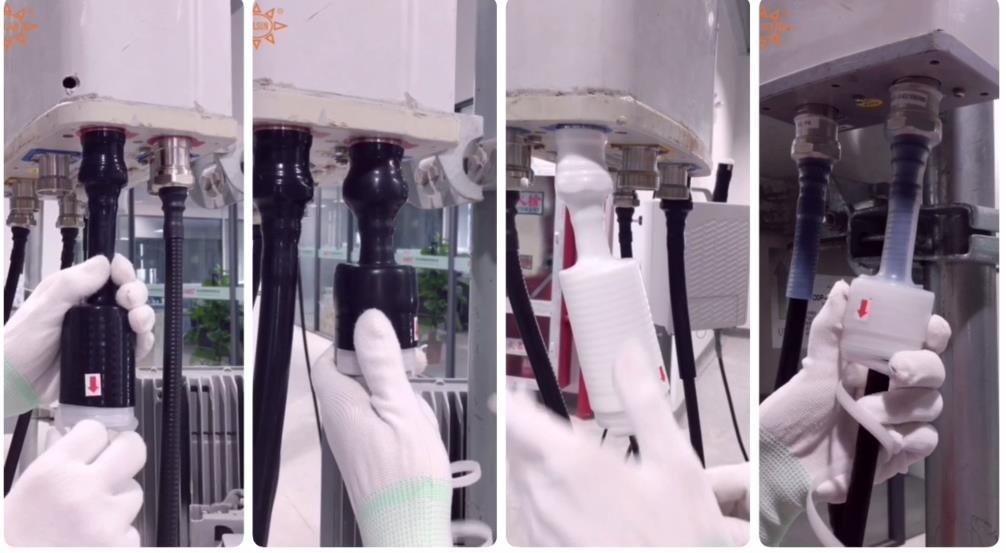
1. Core Mechanism of Cold Shrink Tubes
A cold shrink tube is manufactured from elastomeric materials—primarily EPDM rubber or silicone rubber—and pre-expanded onto a removable support core. During installation, the core is removed, allowing the tube to recover elastically and apply continuous radial pressure to the cable or component.
The key mechanism is elastic recovery, not thermal deformation.
Because the material is stretched within its elastic range, it continuously compensates for minor dimensional changes caused by thermal expansion, conductor creep, or aging of the underlying substrate. This is the fundamental reason cold shrink tubes maintain long-term sealing and insulation performance.
2. Engineering-Level Comparison with Heat Shrink Tubes
Cold shrink tubes and heat shrink tubes serve similar protection goals but operate under different physical principles:
Cold Shrink Tubes rely on stored elastic energy. No heat source is required, and recovery force remains stable over time.
Heat Shrink Tubes depend on thermal activation and polymer memory. Performance is influenced by heating uniformity and operator technique.
From an engineering standpoint, cold shrink solutions reduce installation variability and eliminate thermal risks near sensitive components. Heat shrink tubes, by contrast, remain suitable where controlled heating is acceptable and space constraints are minimal.
3. Typical Application Scenarios
Cold shrink tubes are commonly applied in environments where reliability and environmental resistance are critical:
- Medium and high voltage cable accessories (terminations and joints)
- Wind power and photovoltaic systems with outdoor exposure
- Rail transit and industrial power distribution
- Substations, switchgear, and transformer connections
- Chemical or coastal environments with moisture and pollution stress
These scenarios share a requirement for stable insulation pressure and long service life under complex conditions.
4. Engineering Design Logic of VOLSUN Cold Shrink Tubes
VOLSUN cold shrink tubes are designed by matching material behavior to application stress:
EPDM cold shrink tubes focus on electrical insulation stability, weather resistance, and long-term aging performance, making them suitable for medium and high voltage systems.
Silicone cold shrink tubes emphasize temperature resistance, UV stability, and surface hydrophobicity, often used in outdoor or high-temperature environments.
Design considerations include wall thickness distribution, recovery ratio, and electrical field control rather than appearance-driven factors.
5. Selection Guidance
When selecting a cold shrink tube, engineers should evaluate:
- Operating voltage and insulation requirements
- Environmental exposure (UV, moisture, pollution)
- Temperature range and thermal cycling frequency
- Substrate diameter tolerance and dimensional variation
- Expected service life of the system
Correct selection ensures the elastic recovery force operates within its optimal range throughout the product lifecycle.
6. Limitations and Risk Boundaries
Cold shrink tubes are not universal solutions. They may be unsuitable when:
- The installation space cannot accommodate the expanded tube diameter
- The substrate surface is severely irregular or contaminated
- Application temperatures exceed the elastomer’s long-term rating
- Extremely high mechanical abrasion is present without external protection
Understanding these boundaries is essential to avoid misapplication.
Cold shrink tube technology is not defined by convenience claims, but by its elastic recovery mechanism and long-term engineering reliability. When properly selected and applied, it provides a stable insulation and sealing solution for modern electrical and energy systems.
KEYWORD:Cold Shrink Tube, EPDM Cold Shrink
RELATED_ARTICLES:
Warmth to Every Home: Volsun Distributes 2026 Spring Festival Welfare Packages
1kV Cable Sealing: Why Choose EPDM Cold Shrink Tubes?
Volsun Secures Dual Honors at 2026 Propulsion System Conference
PTFE Heat Shrink Tube FAQs
Volsun Silicone Thermal Pads for New Energy Vehicle Electronic Systems
Why A Leading European Cable Manufacturer Choose Volsun Silicone Rubber Heat Shrink Tubing?
Why EPDM Cold Shrink Tubes Are the Perfect Choice for the Power Industry?
Volsun Receives High Praise from Customers at EP Shanghai 2025


